SCOPIO LABS · RMS

SCOPIO LABS · RMS

The tools existed.
The trust didn't.

The tools existed.
The trust didn't.

My job was to design that.

Product Designer + Product Owner

3 months

B2B SaaS

Figma Make · Claude

Product Designer + Product Owner

Product Designer + Product Owner

3 months

3 months

B2B SaaS

B2B SaaS

Figma Make · Claude

Figma Make · Claude

BACKGROUND

Global distributors manage a fleet of medical scanners across labs, remotely, often from another continent.

PROBLEM

The tool they relied on was unguarded. One wrong line could brick a live scanner, and it did. The faults left distributors afraid to use the remote-takeover platform at all.

APPROACH

Mapped every operation, found the software-update flow was the highest-risk path, and rebuilt it as a governed, guided workflow.

RESULT

One governed system: Persistent Context · Governed Execution · Guided Update Flow.

Open CLI access

Governed execution

Governed execution

Open CLI access

Governed execution

Every action a risk

Every action a risk

Safe by default

Safe by default

Safe by default

Fear

Trust

Trust

Fear

Trust

OVERVIEW

The product

The product

Scopio's scanners digitize blood and bone-marrow smears; a separate AI layer classifies the cells for diagnosis.

100s

100s

of scanners across the US & Europe

1,000s

1,000s

samples a day, per lab

Every sample is a diagnosis, so one faulty device carries a real clinical cost. RMS is the interface I designed to govern that fleet on Scopio's Rport infrastructure.

THE SYSTEM I INHERITED

The challenges in Rport

The challenges in Rport

CHALLENGE 01

No visibility into active operations
Users juggled multiple browser tabs with no way to track which operation was running on which device.

CHALLENGE 02

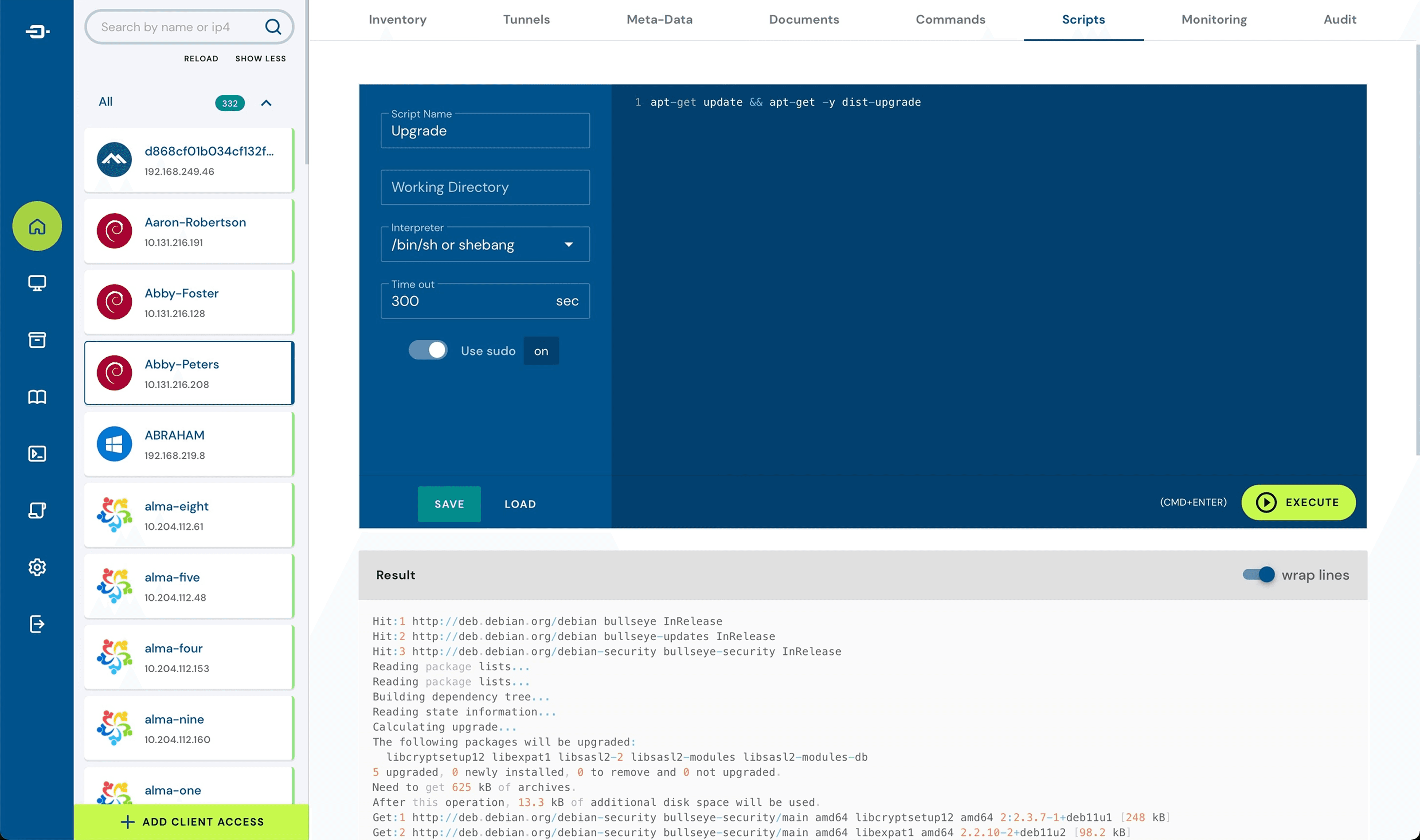
Scripts were open for editing
One wrong change could break a live scanner. Users were afraid to act.

CHALLENGE 04

No shared protocol
Every user invented their own process. Same errors, every time.

01

No visibility into active operations
Users juggled multiple browser tabs with no way to track which operation was running on which device.

02

Scripts were open for editing
One wrong change could break a live scanner, and users were afraid to act. And navigating away from an active update lost all visibility: progress, logs, and context disappeared instantly

03

No shared protocol
Every user invented their own process. Same errors, every time.

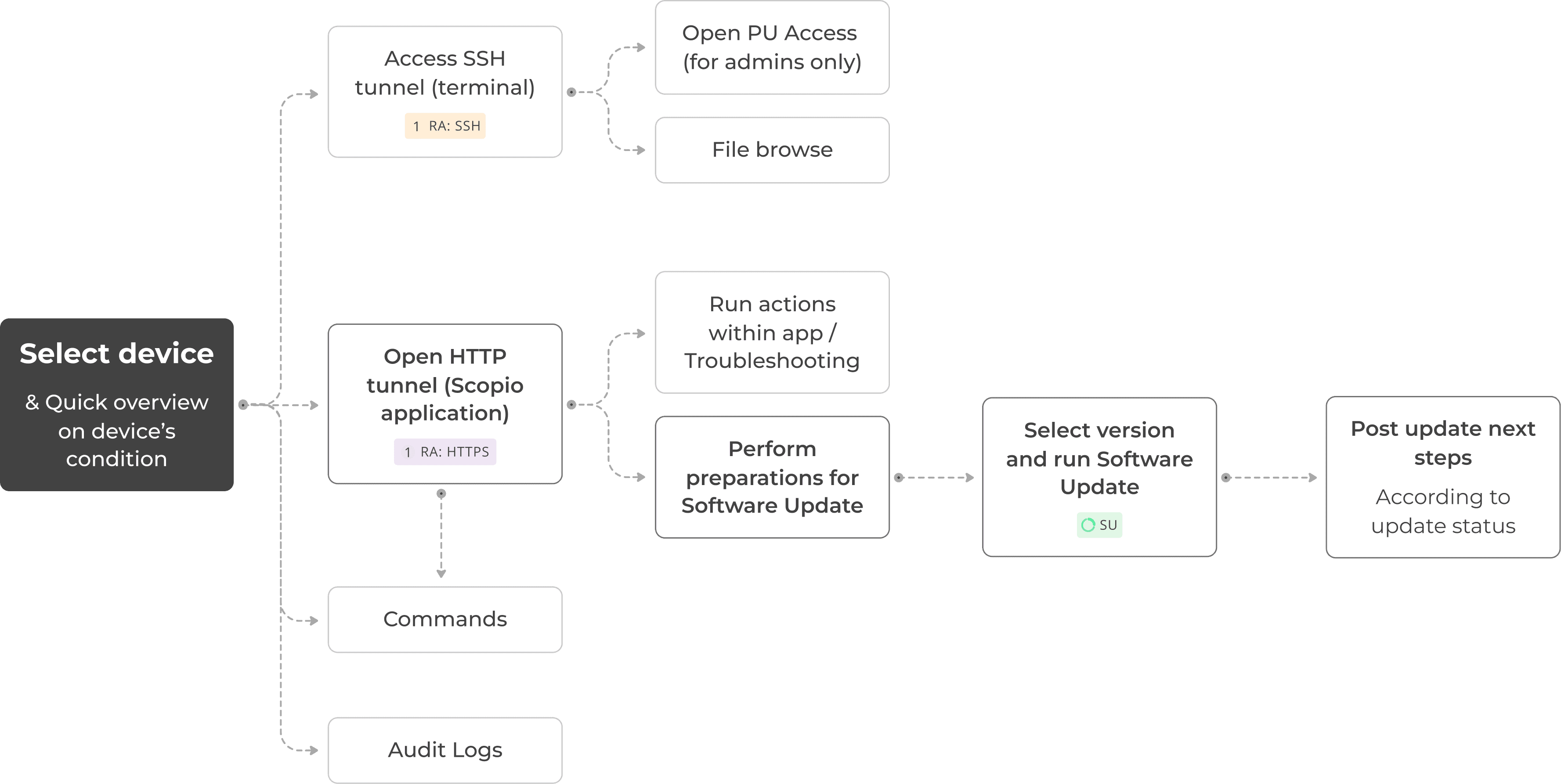
Logic Mapping

Logic Mapping

I mapped how every flow a distributor could run connects to the others. That's where the software update flow stood out as the highest-risk path, and it became the focus of the redesign.

Trust was the business goal.
Every design decision served it.

SOLUTION 01

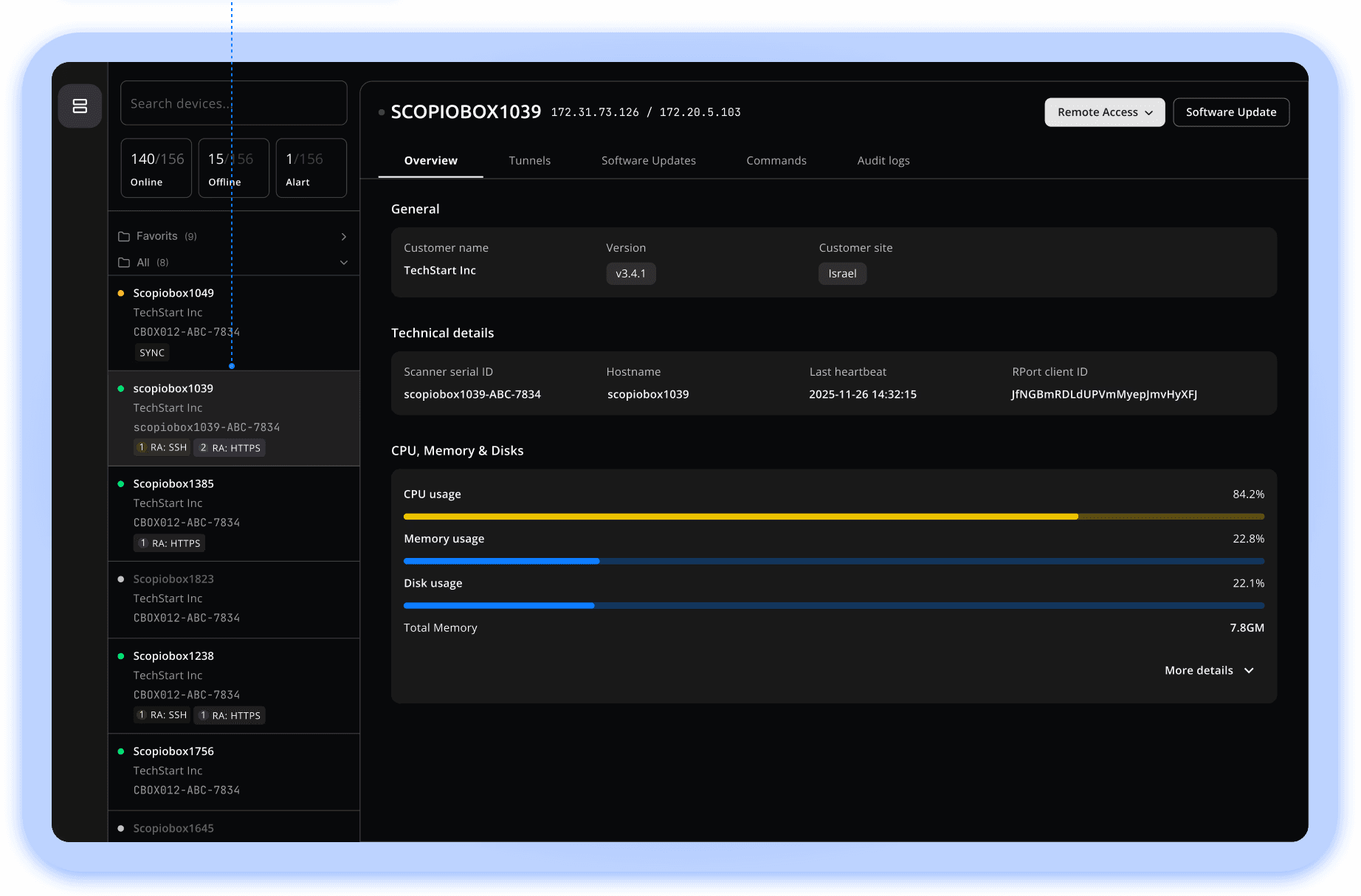
Persistent Context. Always know which device. Always know what's running.

SOLUTION 02

Governed Execution. Scripts locked. No way to break anything. Users could finally operate without fear.

Governed Execution. Scripts locked. No way to break anything. Users could finally operate without fear.

Trust was the business goal.
Every design decision served it.

SOLUTION 03

Guided Update Flow. One protocol. Every distributor. Every time.

Guided Update Flow.
One protocol.
Every distributor. Every time.

The highest-risk path became the most guided: a three-step wizard, prepare → run → verify, with a prerequisites check before anything runs and rollback if it fails.

EXPECTED IMPACT

Designed for trust, built for independence

Designed for trust, built for independence

The system was designed to reduce dependency on Tier-2 support and enable confident, independent operation.

Reduced Support Escalations

Reduce routine Tier-2 escalations (target: ~30% fewer).

Built-In Safety

No remote action can physically damage a scanner, enforced by the system, not by user discipline. A safety principle, not an unmeasured “zero”.

Increased System Adoption

More routine tasks completed independently, without Tier-2 contact.

REFLECTION

What it sharpened

I owned this product as both designer and product owner, from research through high-fidelity design. It was cut short before launch, but it sharpened how I work.

The strongest decisions here weren't about screens.
They were about aligning a workflow with what the business was actually trying to achieve.

Where I'd take it next. A live AI layer that reads the logs of each governed action and summarizes what happened, paired with bulk actions across devices. AI does the reading; the user keeps control.

The tools existed. The trust didn't. My job was to design that.

Get in touch!

Get in touch!

If you have any questions, feedback or would like to discuss my work further, feel free to get in touch :)
SCOPIO LABS

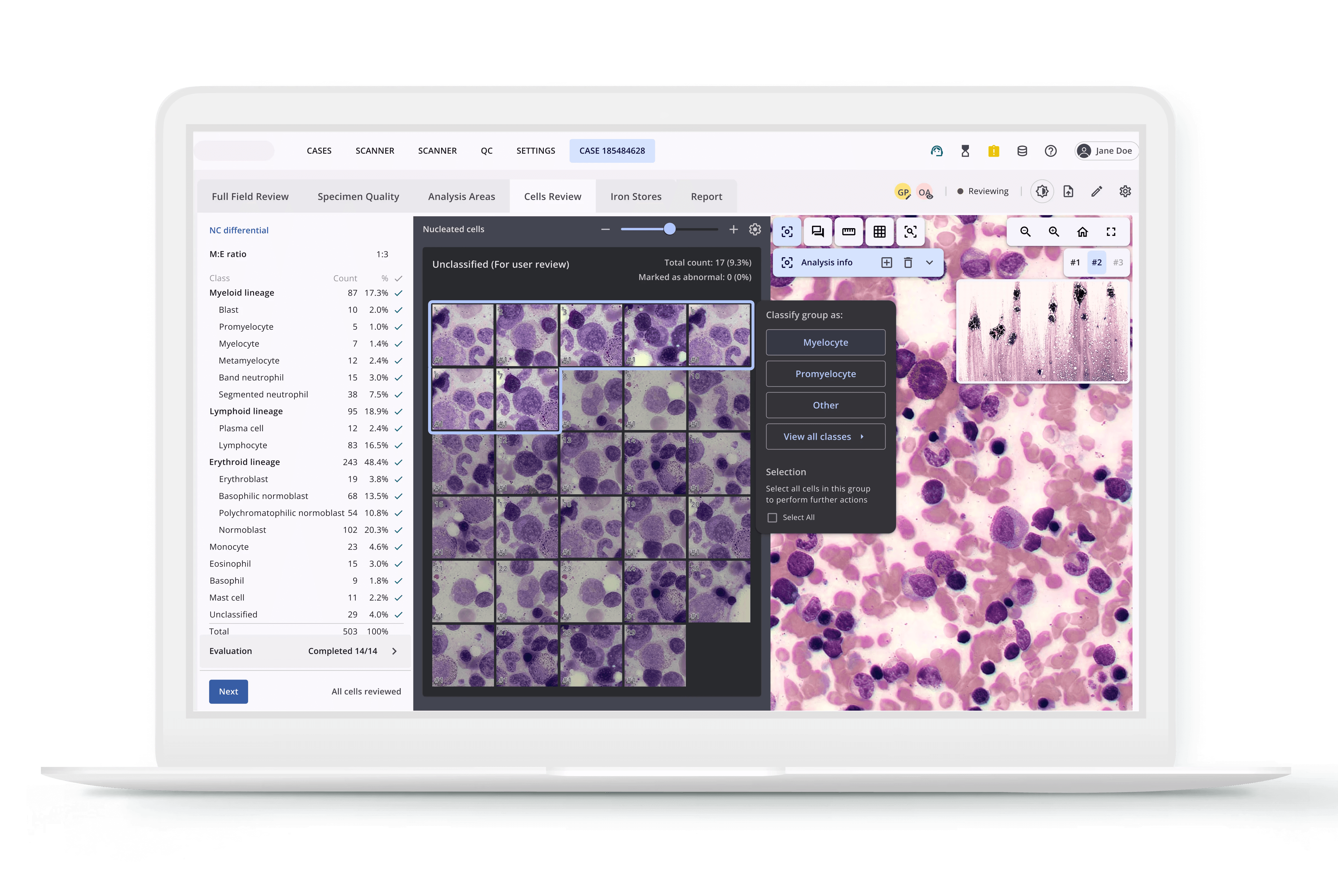
Designing for AI Ambiguity

Transforming Morphology data uncertainty into a supportive expert workflow

View Project
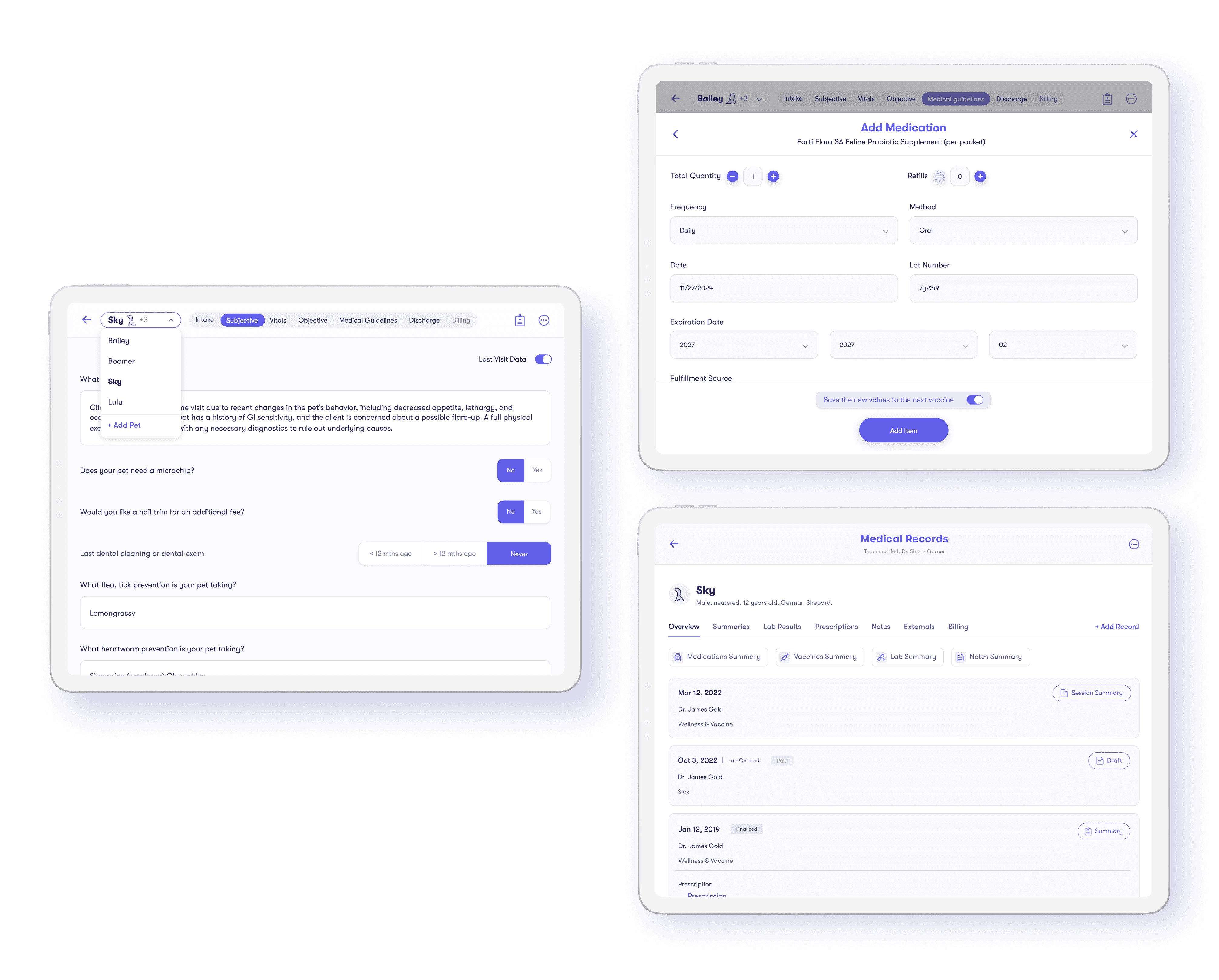
RANGER

B2B iPad App for Medical Documentation

Achieving a 98% adoption rate and boosting efficiency across veterinary teams.

View Project

Bat Chen Ben Arza 2025 Ⓒ

THE SYSTEM I INHERITED

The challenges in Rport

Trust was the business goal.
Every design decision served it.

REFLECTION

What it sharpened

I owned this product as both designer and product owner, from research through high-fidelity design. It was cut short before launch, but it sharpened how I work.

The strongest decisions here weren't about screens.
They were about aligning a workflow with what the business was actually trying to achieve.

Where I'd take it next. A live AI layer that reads the logs of each governed action and summarizes what happened, paired with bulk actions across devices. AI does the reading; the user keeps control.

The tools existed. The trust didn't. My job was to design that.

OVERVIEW

The product

Scopio's scanners digitize blood and bone-marrow smears; a separate AI layer classifies the cells for diagnosis.

100s

of scanners across the US & Europe

1,000s

samples a day, per lab

Every sample is a diagnosis, so one faulty device carries a real clinical cost. RMS is the interface I designed to govern that fleet on Scopio's Rport infrastructure.